
According to archeological and fossil records, about 40,000 years ago, domestication (a phenomenon that deeply alters the biology, lifespan, reproduction, and behavior of all the diverse species involved in it) started to take place involving humans and other animal and plant species, enabling humans to coexist in the same territory even lacking direct group / tribal links.
As time passed, domestication, coupled with Earth’s surface environmental conditions, made the coexistence setup (that humans were experimenting with) become a type of territorial occupation that persists until today and is found worldwide – cities.
By 10,000 years ago, cities (coupled with domestication) enabled human populations to grow exponentially (for the first time in history) in their sites.
Sharing the same territory likely occasioned a further development of human communication skills.
From a morphological perspective, humans have been physically equipped for vocalized speech since at least 2,500,000 years ago.
However, humans started to leave remains of their forms of communication through written records in cities (densely populated) only about
- 9,000 years ago in (modern-day) China
- 8,000 years ago in (modern-day) Europe
- 5,500 years ago in (modern-day) India
- 3,000 years ago in the (modern-day) Americas
(this difference in the timing of the written records is unlikely to be due to one common origin, considering that their graphical representation and grammar are completely different).
With the written records, humans could spread their beliefs within their surroundings, sedimenting abstract concepts (like nations, gods, money, and so forth) to the extent that they were (and still are) considered a legitimate component of reality.
As populations in cities grew, these abstract realities became the main source of connection and exchange between humans in these urban environments, enabling human populations to seriously grow, fight, and cooperate under the influence of a “greater good.”
As a result, the first kingdoms appeared about 5,200 years ago, and the first recordings of economic trades (the abstract idea of money) appeared 5,000 years ago.
By 4,200 years ago, environmental conditions likely made human populations concentrate in cities even more (increasing their density). This allowed humans with different languages and beliefs to meet each other more often, while also marking the beginning of exploring and exploiting the resources available in other cities, making them suppliers (colonies).
From this logic, by 4,000 years ago, empires (the abstract idea of nation) were already established, and humans were already describing in their written records their deities (the abstract idea of gods) and consequently connecting on larger scales in their name, which in turn also contributed to the growth of their kingdoms and empires.
Over time, written records became more elaborate, featuring descriptions that, despite varying immensely in their deities and geographical boundaries, share some similarities in their narratives.
From a broad perspective, in the teachings of different gods (that also often overlap with foundational ideas of nation, politics, and so forth) it is common to find:
- a need for hierarchical organization within human societies through the devotion humans should have towards authoritarian figures that could be other humans (authorities) or mythic figures (gods)
- the description of a paradise that happened in the past and is lost
- the better times that are about to come directly related to the individual level of devotion and obedience towards their authorities (if a human is not striving, it is because they are not obedient nor devoted enough)
- and cementing that the ideal social human organization is from a male human perspective, with care (together with females, children, elderly) being marginalized (if not excluded) from the “official” social sphere.
As time passed, kingdoms and empires were expanded, with cities being the stages where all the action happened.
It is important to highlight that cities are (still) the only tangible space where humans can inhabit and directly interact with each other.
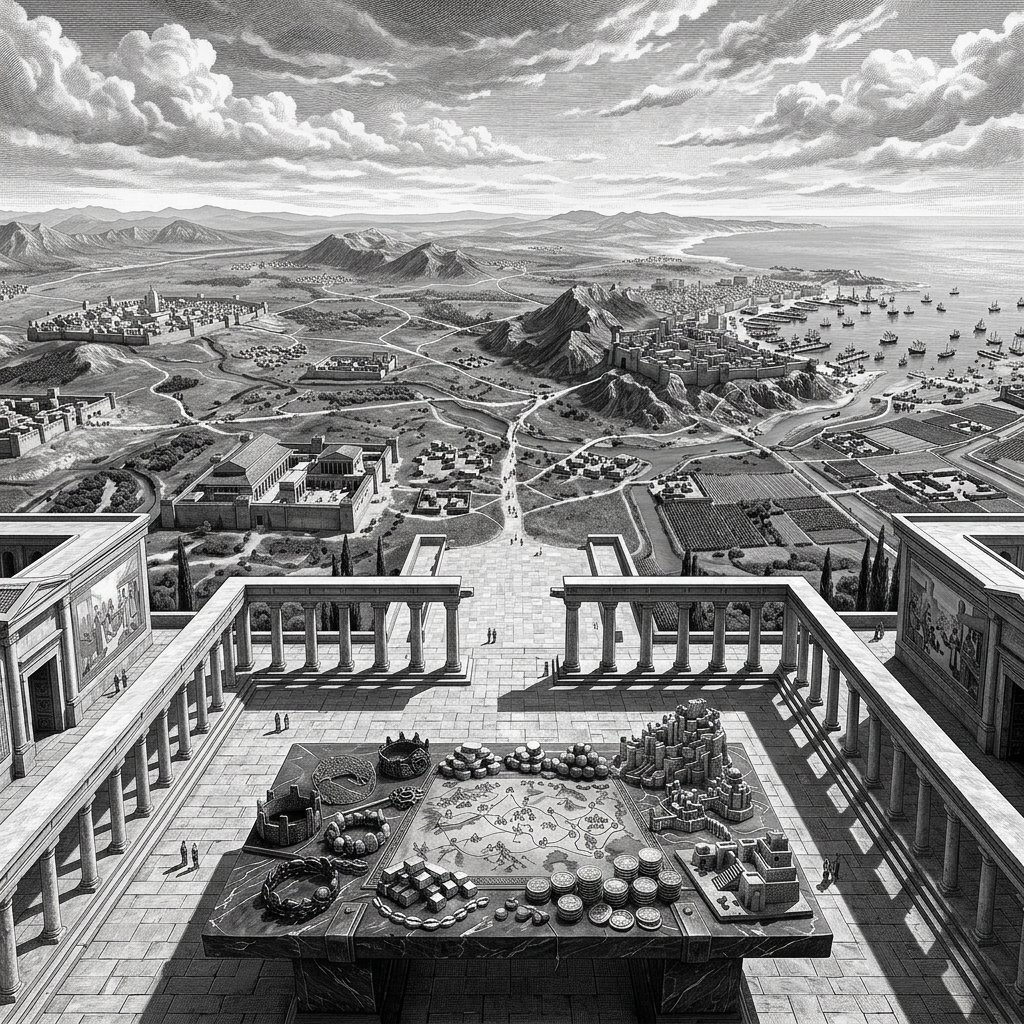
Every other governance layer above the city, such as nation, state, empire, as well as currencies, are all invisible abstractions, therefore entirely dependent on human faith.
While these abstract realities are significant components of human life everywhere, they are not solely responsible for the good or evil that people experience throughout their lives.
These abstractions are merely tools that humans have developed over the years to enhance their connections with each other.
Additionally, it is also important to highlight that there is a tribal / group connection component in human existence that went missing due to domestication (which in evolutionary terms it was a minute ago) that we are all longing for that can make life in general – easier.
Perhaps humankind has reached a point in its evolutionary journey that it is safe to start to consider abstract realities as what they actually are- abstractions, not tangible reality- and to turn into each other, searching for the connection we are all longing for.
All references for this article can be found here.